KHS Blow Molding Machine Heater Upgrade: Finally Getting That Heat Right
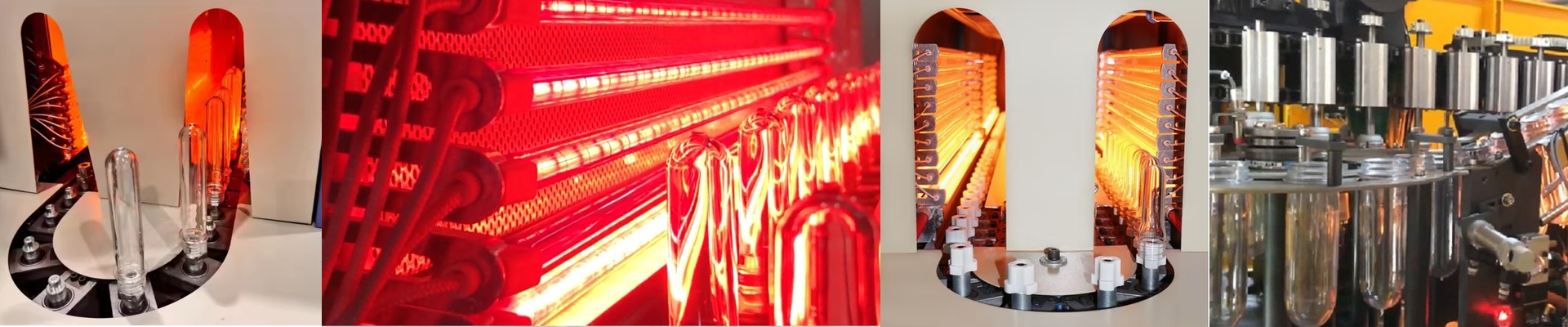
Ever run a KHS blow molding machine and watch your PET preforms heat up unevenly? It’s the kind of thing that quietly eats away at your day—more scrap, slower cycles, and that nagging feeling that the machine isn’t doing what it should. We built a heater upgrade to fix that. It’s a high-density halogen lamp, made to drop straight into Krones Contiform 3 and compatible KHS systems. This isn’t some off-the-shelf tube. It’s a precision piece, built to give your machine back the heat profile it was designed for.
Power, voltage, and fit—kept simple
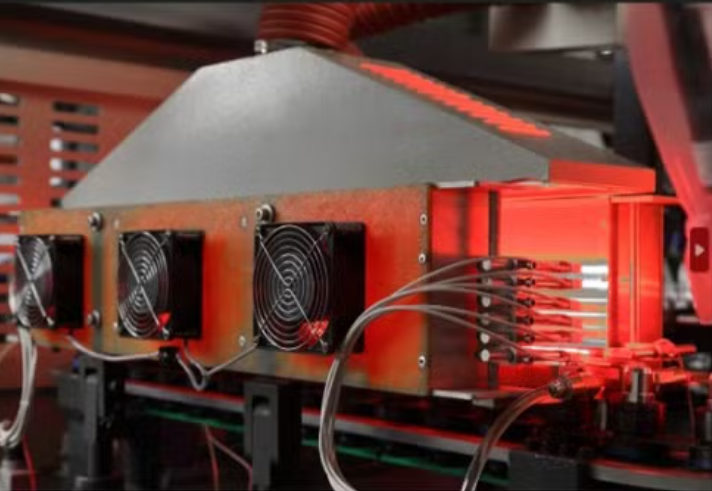
At the heart of this upgrade is serious power density. The lamp runs at 2500W on 400V. That high-voltage approach keeps current lower for the same wattage, which means less line loss and cooler internal wiring and terminals. The tube length is matched to the heating zone—usually around 300mm—so the heat field covers both the preform neck and body evenly. You get fast response and stable temperature control, but there’s a practical catch. A 400V, 2500W tube throws off a lot of heat. Your machine’s cooling and ventilation need to be up to the job. If the cooling is weak, you risk shortening the lamp’s life and wearing out nearby parts faster.
What’s inside—and why it matters
The lamp uses a quartz envelope filled with halogen gas. That chemistry lets the filament run hotter without burning out, which gives you stronger infrared output and steady heat across the zone. A reflective coating on the quartz focuses the energy forward, cutting down stray radiation and smoothing out the heat field. The connection is an R7s two-pin ceramic interface. It holds tight, handles repeated heating and cooling, and makes the swap simple—no rewiring, no custom mounting.
What this means on the floor
In PET blow molding, the preform needs to hit a precise, even temperature before it stretches. When the heat is uneven, you get weak spots, uneven wall thickness, and bottles that don’t make the cut. With this halogen lamp, the thermal distribution gets back to what the machine intended. The result? Fewer rejects and cycle times that feel more consistent. Installation is straightforward. Wire it up, set your parameters, and you’re running with tighter thermal control. It’s built for the real world of a blow molding cell—ready for vibration and high ambient heat. Just remember the trade-off: that high heat density needs solid cooling. Give it proper airflow, and you get heating that’s stable, repeatable, and keeps the line moving.