Stop Fighting with Your KHS Blow Molding Lines
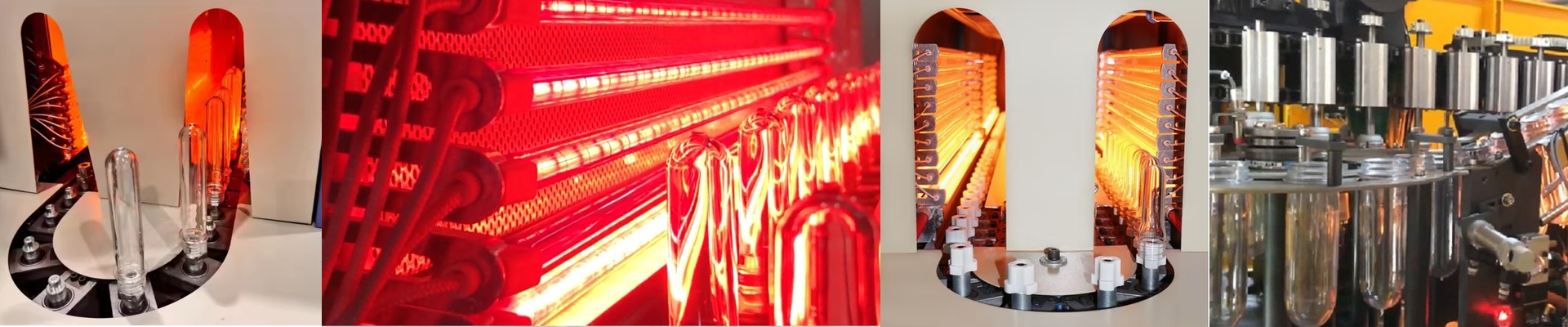
If you’ve spent any time on a KHS line, you know the frustration of uneven heat. One minute things are fine, and the next, you’re staring at bottles with weird wall thickness or structural weak points that shouldn’t be there. It usually comes down to the preform. If it doesn’t heat up evenly, the stretch just doesn’t happen the way it’s supposed to. We got tired of seeing that happen, so we built a replacement IR lamp that actually kills those annoying hot and cold spots. Why the heat acts up Here is the thing: most standard lamps have this “end-effect” problem. The heat just drops off a cliff as you get closer to the connectors. It’s a flaw in the design. To fix this, we changed how the filament is wound. We tightened things up to flatten out the thermal profile. By tweaking the wattage-to-length ratio, we made sure the infrared energy hits the preform consistently across the whole zone. No more guessing. Just a stable heat field that holds steady, even when you’re running high-speed cycles. The nitty-gritty on the build We used high-purity quartz glass because these things take a beating with rapid thermal cycling. We also added a halogen cycle. That sounds technical, but all it really does is stop the filament from evaporating and gunking up the inside of the tube. You know that “blackening” that happens over time and kills your heat output? Yeah, we stopped that. Plus, the connectors are a direct match for KHS footprints. You can just wire them in. No messing around with brackets or custom modifications. It just fits. A quick heads-up on the trade-offs More heat density is great because you get faster warm-ups and shorter cycles. But there’s a catch. When you crank up the output to fix uniformity, your cooling fans have to work harder. If you’re pushing the wattage past the OEM baseline to make up for a leaky or poorly insulated oven, just keep an eye on your cooling system. You don’t want to overheat the machine frame. If your current tubes are worn out, swap them for these. Your preform temperatures will stabilize, and you’ll spend a lot less time tossing scrap into the bin.